How a Finnish classroom helped shape the future of AI-powered oral assessments
Schools around the world are increasingly exploring AI tools for education as they navigate learning in the era of Generative AI. Traditional written assessments are becoming less reliable due to AI-assisted text, prompting educators to look for ways to measure true understanding. This is exactly where better-ed, our voice-enabled AI assessment platform, is gaining global traction.
As we scale better-ed into Europe, we’ve been conducting pilot engagements with schools through the Northern Lights Accelerator Program by Maria 01 in Helsinki. The program has opened doors for us in the EU and connected us to educators eager to explore AI for learning, especially in multilingual and oral-heavy classrooms.
READ MORE: The New Face of Learning: How AI in Education Is Empowering Students and Teachers in 2025
One of our most valuable engagements so far took place at Kulosaari Secondary School, an institution known for its international focus and strong English-language programs. This pilot gave us critical insight into how European classrooms use AI tools for students and what they expect from next-generation assessment platforms.
Why a Finland Pilot Matters for Global AI Adoption in Education
Finland’s education system is one of the most globally respected—its pedagogical design is student-centered, research-driven, and built around teacher autonomy. This makes Finnish schools ideal environments to observe how AI for education sector tools can genuinely support teachers rather than replace them.
Piloting in Finland also helps us understand how European schools think about learning and AI, especially in bilingual environments. Many Finnish schools emphasize oral communication, which aligns perfectly with better-ed’s strength: enabling authentic, voice-based assessment that reveals real comprehension.
This pilot isn’t just a showcase. It represents an important step in better-ed’s global expansion—an opportunity to refine the platform in collaboration with educators who deeply understand the realities of education with AI.
Inside the Kulosaari Secondary School Pilot
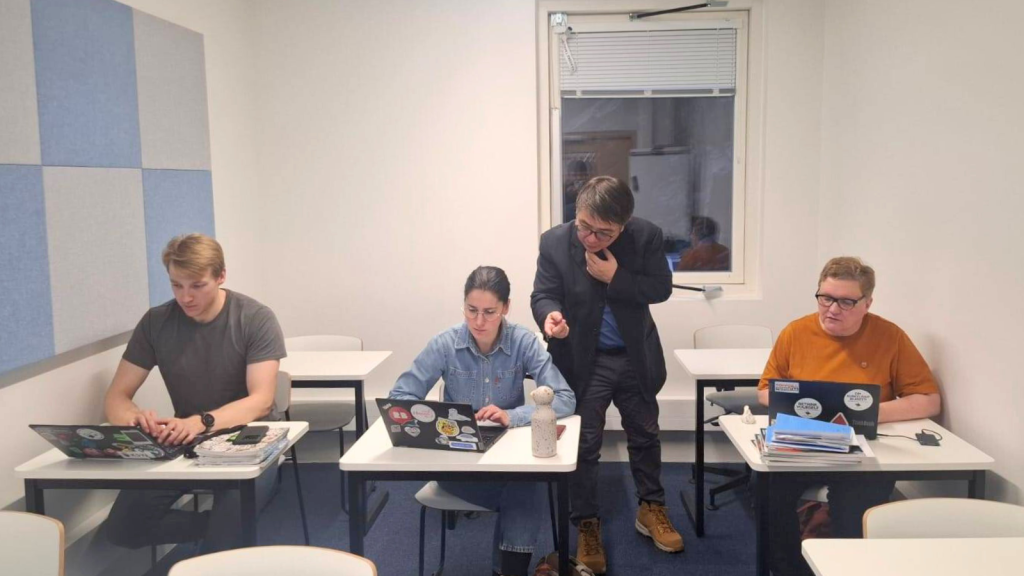
The on-site session was led by Allan Tan, founder of Predictive Systems Inc. and creator of better-ed. Three English-language teachers participated, and the session quickly transitioned from a product walkthrough to genuine experimentation.
The teachers engaged in live voice conversations with the AI, tested several task types, uploaded their own lesson materials, and explored how the platform handled real-world teaching scenarios they normally simulate manually. Because they regularly conduct doctor–patient role-play exercises in English, they immediately saw how better-ed could streamline these oral assessments while allowing teachers full control of prompts, materials, and difficulty.
They particularly responded positively to how naturally the AI maintained dialogue and how easily better-ed accepted content from different sources—prompts, PDFs, and YouTube videos. These are the workflows teachers already use, and integrating AI tools for students into existing routines is one of the biggest indicators of potential adoption.
The Insights That Helped Strengthen Better-ed
Our goal wasn’t merely to demonstrate AI tools for education, but to learn how European teachers felt about integrating learning with AI into everyday classroom practice. Their feedback highlighted key areas where better-ed could become even more aligned with teacher expectations.
Teachers wanted an assessment setup process that more clearly reflected their assumption of an oral-first tool. Once they discovered how the assessment flow worked, the platform made sense, but this pilot prompted us to refine how new teachers are introduced to the workflow.
They also preferred that the AI speak more concisely and avoid repetitive statements. This is especially important for language learners who may struggle with overly enthusiastic or verbose responses. Their insights directly shaped our next tuning cycle—to make AI answers more direct, grounded, and classroom-friendly.
The need for multilingual support surfaced early. Finnish–English bilingual learning is common, and teachers appreciated that multilingual support is already part of better-ed’s roadmap. This reinforced our decision to prioritize Finnish language support for the European rollout.
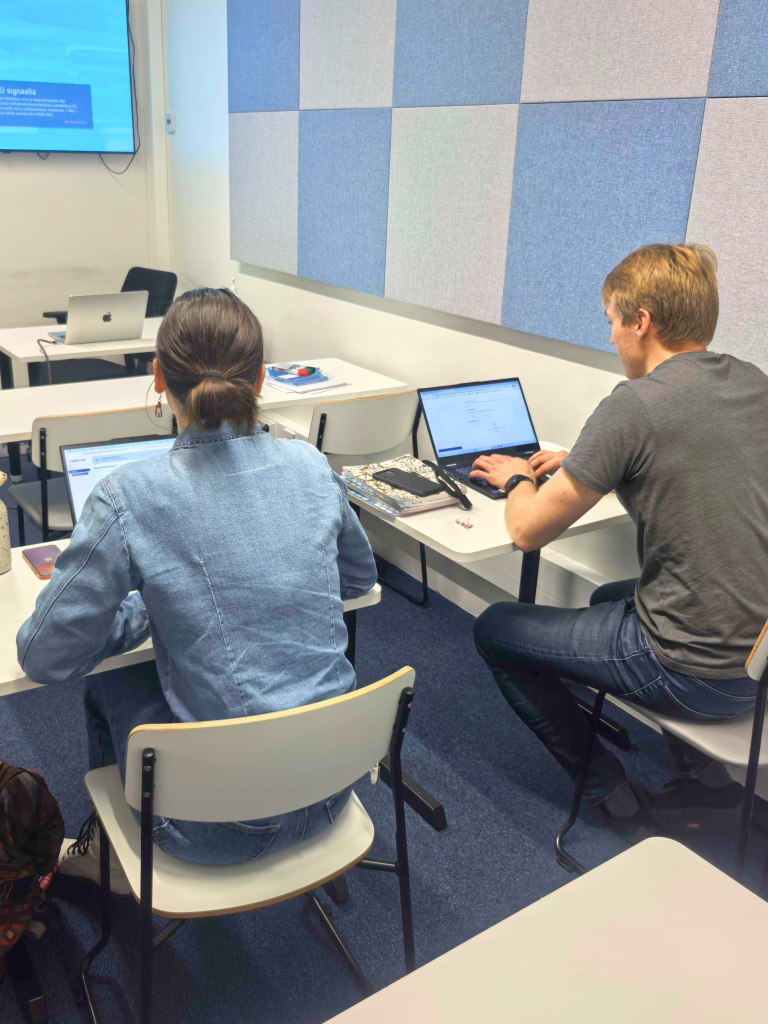
Perhaps most importantly, teachers highlighted the importance of emotional context during oral assessments. While not asking for diagnostic features, they expressed interest in subtle indicators—like when a student seems confused or unsure. This aligns with PSI’s Responsible AI Principles: supportive, explainable, safe, and transparent use of AI in education.
Finally, teachers appreciated the option to reuse and share content, but emphasized the importance of credibility. They want materials that come from trusted educators. This insight is now shaping our upcoming Content Champion approach to resource sharing.
Responsible AI, Classroom Safety, and Trust
One of the strongest themes that emerged in the conversation was trust. Educators are ready to embrace AI tools for education, but they want tools that respect teacher authority and safeguard student wellbeing. better-ed’s structure—built on transparency, teacher control, explainability, and strict privacy protections—resonated strongly with the teachers we met.
This pilot reaffirmed our core philosophy: AI does not replace teachers; AI amplifies their ability to understand students more deeply.
What This Pilot Means for better-ed’s 2026 Expansion
The Kulosaari pilot marks the beginning of a broader European expansion. Our 2026 roadmap includes deeper engagements across the Nordics, additional multilingual capabilities, and continued strengthening of teacher-driven AI safety features. Our focus is on building local relevance—ensuring better-ed supports bilingual classrooms, oral assessments, and offline-friendly learning contexts across Europe and Asia.
As we scale, we remain grounded in the same principle: Your data. Your AI. Your way.
Every teacher and school should have full control over how they use AI for learning, assessment, and student support.
Final Thoughts: Co-Designing the Future of Education AI
What stood out during the Kulosaari session wasn’t just teacher curiosity, but a shared vision for equitable, human-centered learning. In a world where AI-generated text is easy to produce but harder to validate, oral assessments offer a powerful way to understand what students truly know.
This pilot affirmed that education AI can remain ethical, explainable, and teacher-driven. It showed that when educators and technologists collaborate, the result isn’t just a tool—it’s a learning model shaped around real student needs.
Join the Next better-ed Pilot in Europe
We are expanding better-ed’s pilot program to more schools across the Nordics and EU. If your institution is exploring AI for education sector solutions—whether for oral exams, ESL support, bilingual classrooms, student engagement, or AI literacy—we’d love to collaborate.